
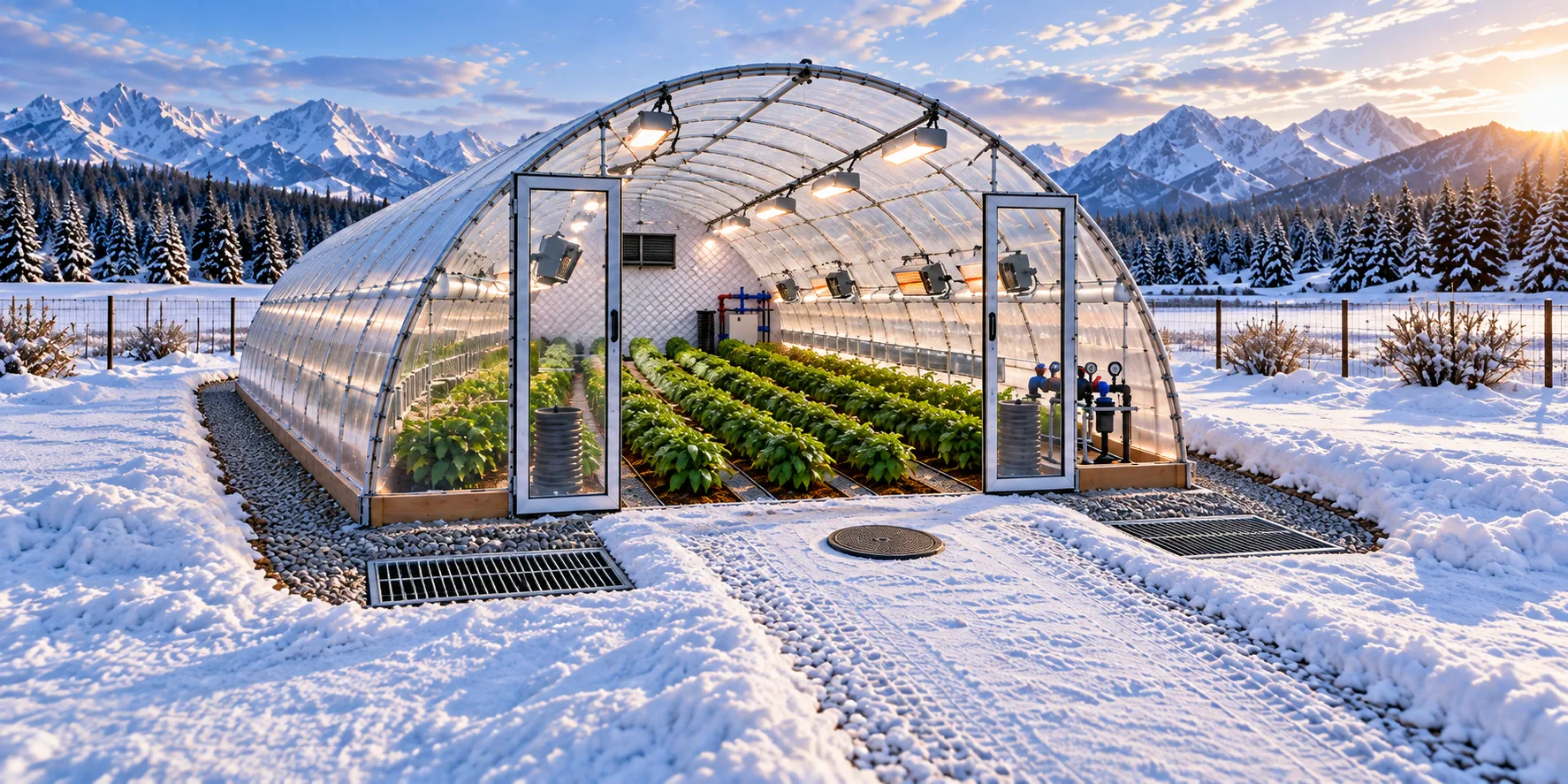
GigaTown North concept: a lit FarmCo greenhouse growing crops in a snowy mountain landscape Concept rendering · North

GigaTown North · current planning basis

Turn compute into a winter economy.

A northern regional model connecting firm power, a major compute anchor, useful heat, controlled-environment agriculture, productive industry, and civic thermal infrastructure.

ProposedModeledSite not selected

The regional proposition

Make winter part of the infrastructure advantage.

Cold regions pay heavily for heat, short growing seasons, and distance. Large compute operations create continuous power demand and continuous heat that is normally rejected.

GigaTown North is designed to connect those facts. Firm generation supports the new load. Compute creates scale and a recoverable thermal source. HeatCo moves or rejects heat. FarmCo turns shared infrastructure into capacity for independent growers. Civic thermal uses make a portion of that value visible in public life.

The current planning basis is a roughly 20,000-person community. It remains a proposal, not an approved project, selected site, licensed plant, or vendor commitment.

North system architecture

Firm power in. A wider winter economy out.

Useful heat customers improve the system’s value, but they never become required cooling or safety infrastructure.

Two heat grades, two jobs.Approximately 44°C recovered data-center heat can serve low-temperature uses. The current 110°C district-primary concept requires a separate higher-grade source. The two must not be presented as interchangeable.

How the model creates value

A connected northern economy.

  1. Firm power anchors the system.The current planning basis uses NuclearCo and a six-module Xe-100-class reference. That is a planning reference, not a procurement or licensing commitment.
  2. Compute creates steady demand and recoverable heat.The anchor customer makes large shared infrastructure possible while producing an output HeatCo can manage.
  3. HeatCo matches heat to real demand.Cooling, recovered heat, higher-temperature service, and final rejection remain distinct operating functions.
  4. FarmCo lowers the infrastructure barrier.The live basis is 300 standardized 30-by-96-foot greenhouses across ten farms, with one selected HeatCo Green thermal station per greenhouse.
  5. Civic uses make value visible.Winter Commons and the Civic Thermal Park explore how useful heat could support warm public space in a cold climate.
  6. Industry can follow the heat.Food processing, storage, drying, malting, brewing, and other users remain recruitment opportunities—not committed tenants.
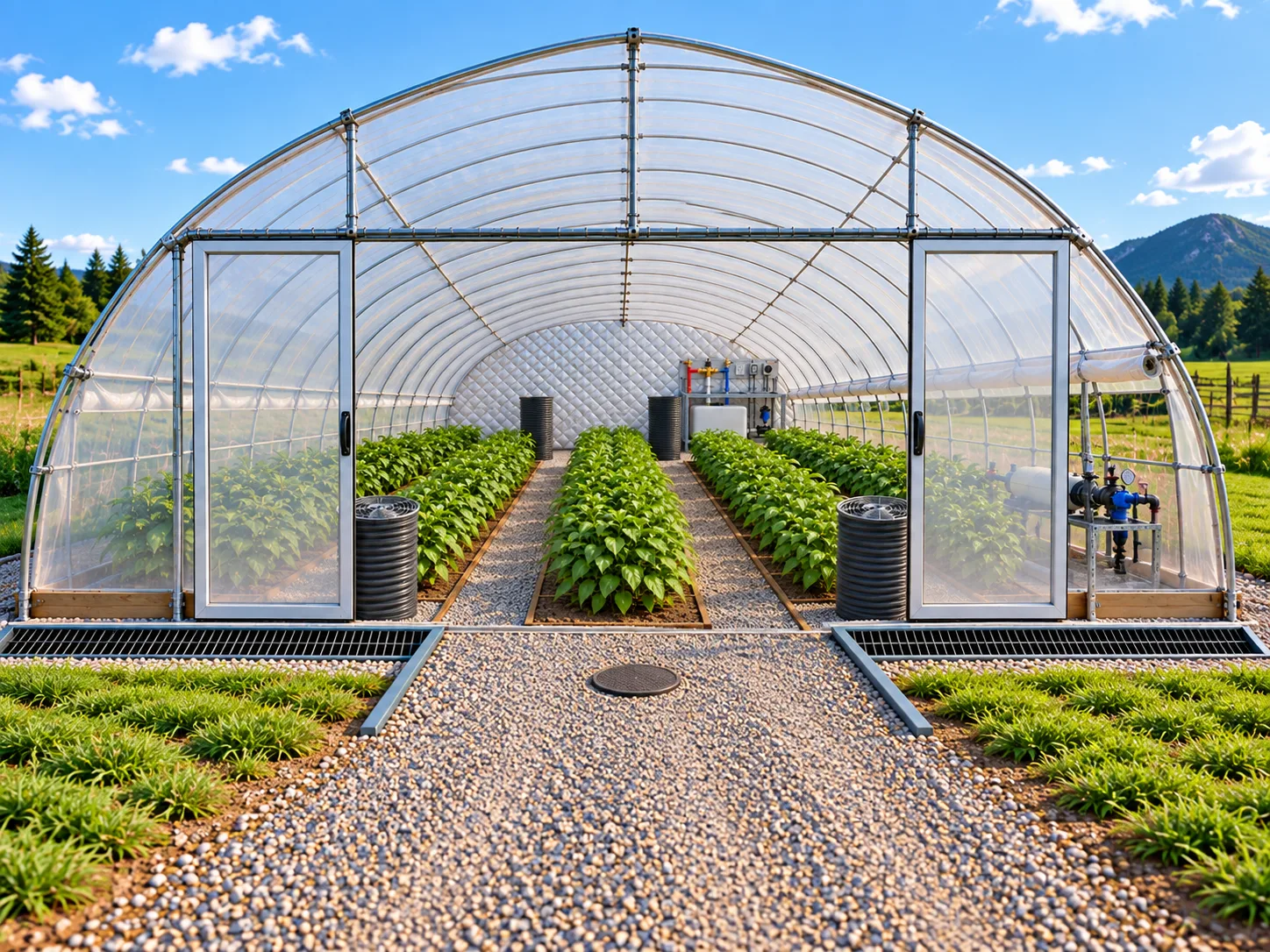
GigaTown North concept view into a FarmCo greenhouse with rows of crops in summer FarmCo concept · North

Productive infrastructure

Industrial-grade infrastructure for independent growers.

The image communicates seasonal character and greenhouse intent. Visible equipment is illustrative; the current FarmCo and HeatCo Green documents govern technical layout.

Accountable operators

Three current company packages.

North is the most developed GigaTown package, but not every ownership or governance boundary is settled.

FarmCo

Current company package

Industrial-grade infrastructure for independent growers.

FarmCo is North’s greenhouse infrastructure and agricultural cooperative platform. It owns and manages the standardized houses, shared farm systems, crop-side climate batteries, water recovery, agricultural electrical service, and grower operating model.

Growers control crops, labor, and growing decisions. HeatCo separately owns and operates the thermal station beside each greenhouse, including industrial heat-rejection equipment and HeatCo-side pumping, controls, and emergency obligations. The commercial and electrical boundaries are designed to keep farming costs separate from HeatCo’s cooling duty.
HeatCo

Current parent utility · mixed division maturity

Cooling where necessary. Useful heat wherever it fits.

HeatCo is North’s parent thermal utility. Its current Green division provides greenhouse thermal stations and required heat-rejection service. Civic covers Winter Commons and other public thermal concepts. Heat and Hot Water remain provisional service packages; Irrigation has a provisional boundary; Refrigeration is a historical concept retained for reconsideration rather than current funded scope.

HeatCo dispatches the thermal machinery. Its obligation is reliable cooling first, productive heat use second, with independent rejection always available.

NuclearCo

Current planning package

Firm power with useful thermal interfaces—and uncompromised safety boundaries.

NuclearCo is North’s current firm-generation package. It provides the proposed power backbone and studies nuclear-side interfaces for condensate preheat and higher-grade district heat.

Farms, parks, thermal customers, and preheaters are beneficial uses, not safety systems. Normal plant operation, shutdown cooling, condenser capability, and required heat rejection remain independent.

Still unresolved.North’s standalone PowerCo, WaterCo, LandCo, development-company, and broader civic-governance boundaries are not yet selected. This site does not invent them to make North resemble South.
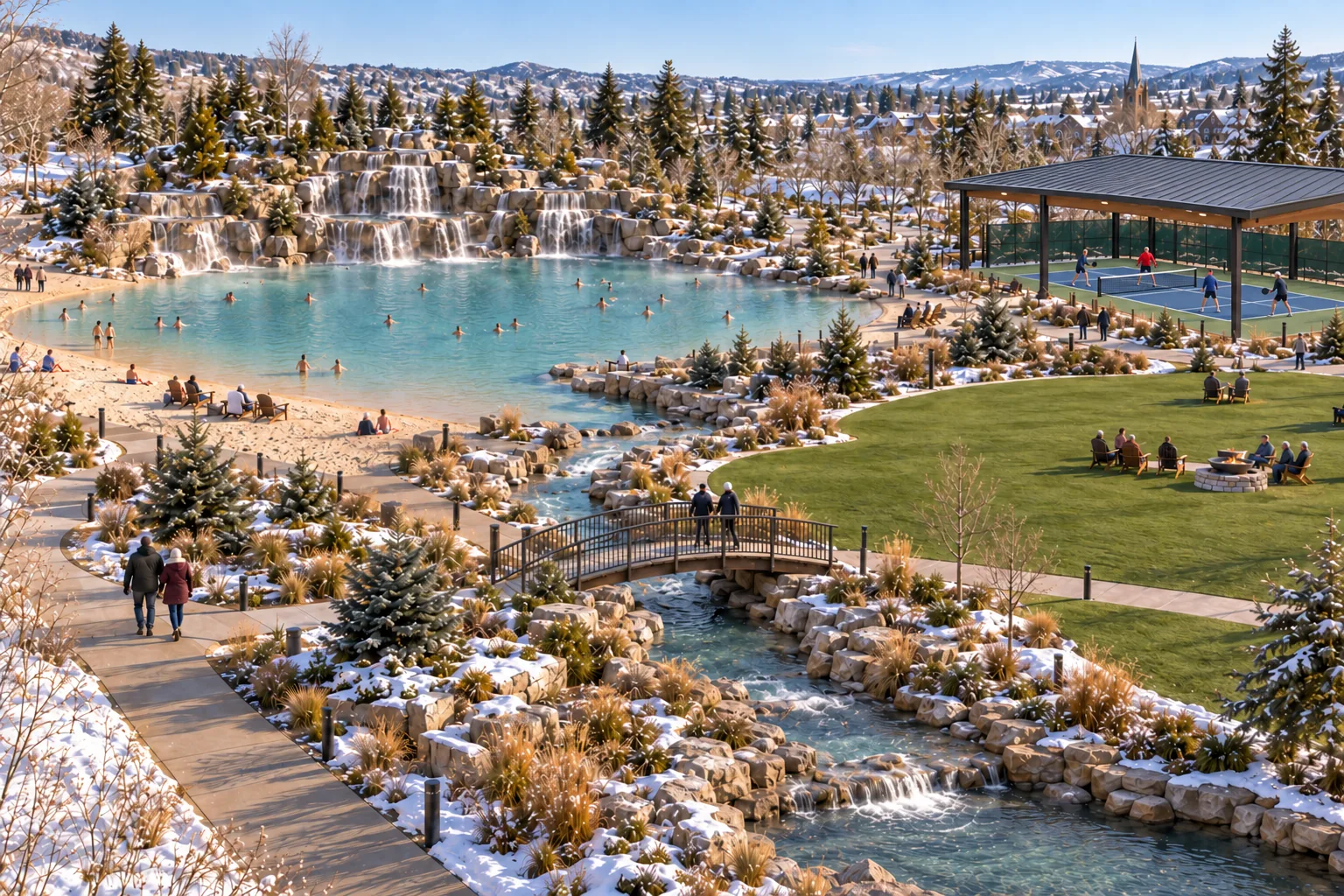
GigaTown North concept: people gathering beside a warm outdoor pond, covered courts, lawn, bridge, and pavilion in a snowy mountain setting Concept rendering · Winter Commons

Civic thermal value

Make the benefit visible in winter.

Winter Commons is the civic expression of the same system idea: use an available resource to create public life that a cold community could not easily support on its own.

Warm gardens, walking routes, water, gathering spaces, and recreation remain concepts subject to design, public participation, operating agreements, and site conditions. They are not required thermal loads and do not replace HeatCo’s independent operating capability.

Continue exploring

North is one expression of the GigaTown method.

Compare it with a southern model built around water delivery, solar resources, elevation, agriculture, and a separate Public District.