Place first
Climate, geography, resource constraints, existing industries, and community priorities set the design problem.

Regional projects
GigaTown begins with regional conditions, not a universal blueprint. North and South use different anchors, systems, companies, and public boundaries because their climates and economies demand it.
The same questions lead to different architectures.
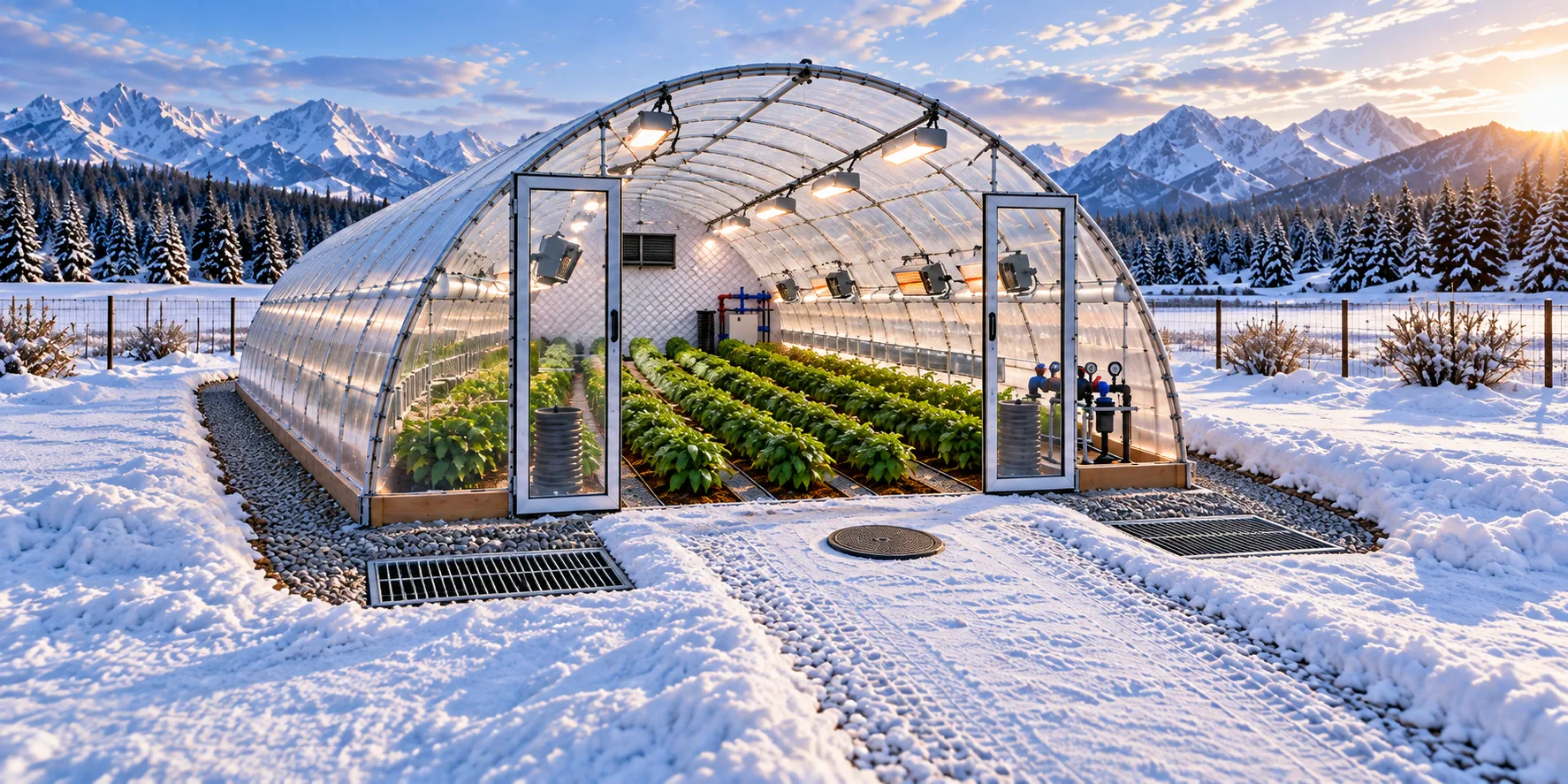
North · current planning basis
Firm nuclear generation, a compute anchor, useful heat, 300 standardized greenhouses, food and industrial opportunity, and civic thermal infrastructure.
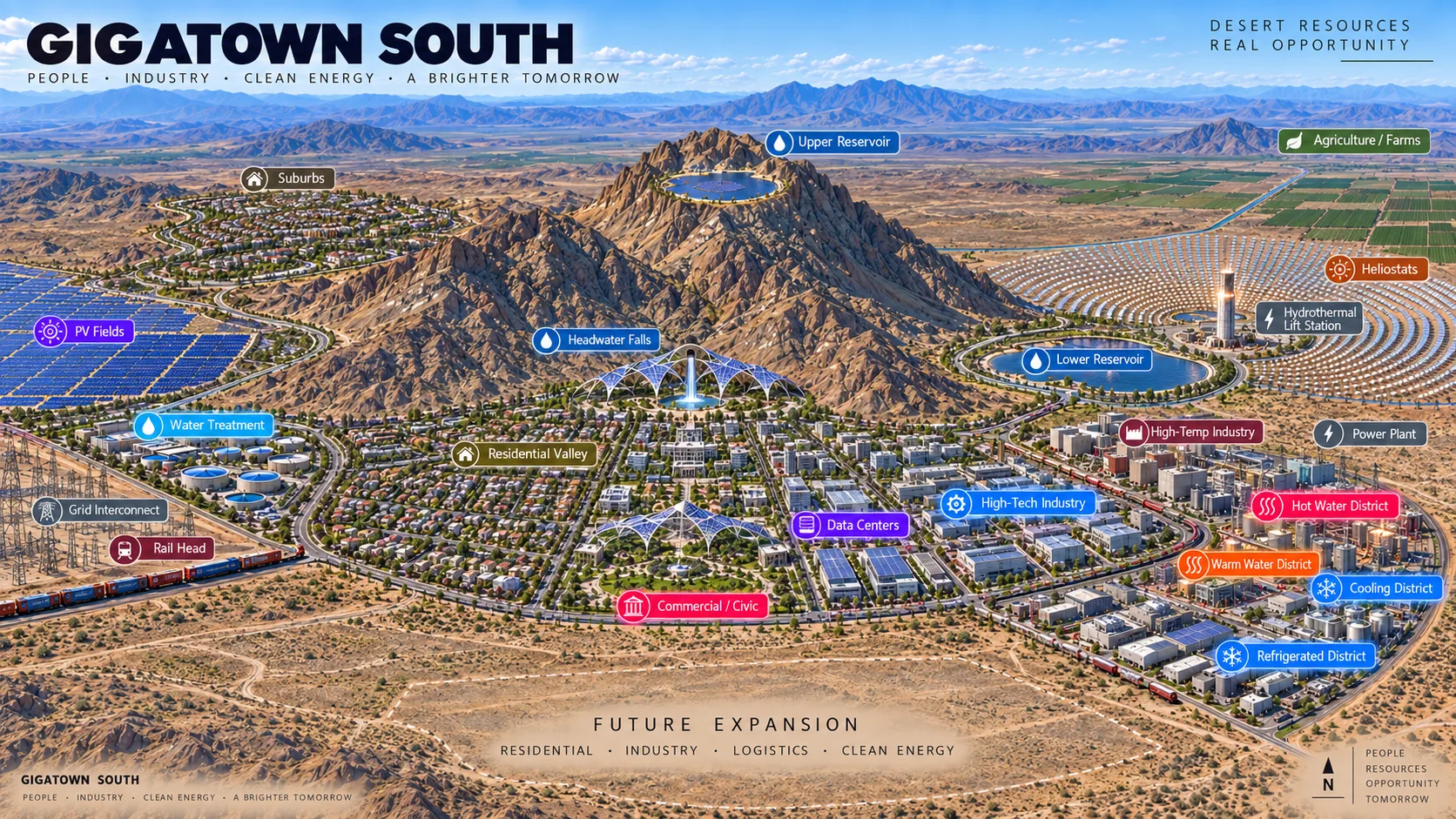
South · current planning basis
Irrigated agriculture, water services, a single-collector solar-lift study, six-unit gravitational storage, compute, thermal services, phased land development, and a separate Public District.
What stays consistent
Climate, geography, resource constraints, existing industries, and community priorities set the design problem.
Each company or public entity owns a real scope. Missing or unresolved boundaries are not invented for symmetry.
Resource reuse never replaces final rejection, emergency operation, fluid isolation, or regulated safety functions.
Where they diverge
Cold weather makes winter heat economically and socially important. The current model uses firm nuclear generation, compute, HeatCo, FarmCo, and civic thermal uses. Current standalone North PowerCo, WaterCo, LandCo, development-company, and governance boundaries remain unresolved.
Water delivery, irrigation, solar resources, and elevation shape the opportunity. South has defined proposed private companies and a separate Public District. Its farmer partnership is a cross-company program rather than a separate agricultural company. South has no current nuclear scope.
Status discipline
These are current planning models. They do not imply selected sites, final water rights, vendor commitments, permits, financing, tenants, municipal formation, or public funding.